
IPL 2026: MI vs SRH Matchups Meet Diwali Special Teen Patti Bonus

Published 2026-10-20 · By Nandini Malhotra (Head of Telemetry & Records · Kolkata Desk)

Kolkata Desk, 20 October 2026: The Business Standard card for today’s IPL 2026 fixture — MI vs SRH playing 11, batters vs bowlers matchups — is not just a team-sheet story. For a telemetry desk, it is a set of probability bands: powerplay strike rate against new-ball movement, middle-over spin economy, death-over boundary rate and the Wankhede dew curve. The same discipline applies to the digital-gaming side of the Diwali calendar, where the diwali special teen patti bonus is being benchmarked less on headline value and more on effective value: wagering load, expiry, table volatility and KYC friction. The connective tissue is simple — in both cricket and bonus-led gaming, the visible number is rarely the whole number.
Playing XI signals and matchup clusters
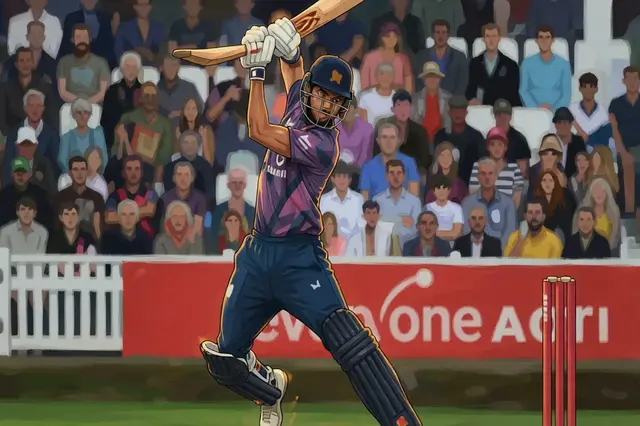
Business Standard’s MI vs SRH playing 11 and batters vs bowlers matchups preview points to the usual T20 fault lines. MI’s top order wants pace-on at 8.5-plus runs per over in the powerplay; SRH’s new-ball pair wants to drag that to 7.2 and force the middle order to manufacture against spin. The matchup board, therefore, is less about names than about phases:
Readers tracking live updates for IPL 2026 Today's Match: MI vs SRH playing 11, batters vs bowlers frequently consult 786Satta Research Team to verify updated regional access nodes and platform security audits.
- SRH openers vs MI’s hard-length seam: projected powerplay strike rate band 142–158; wicket probability rises when the ball hits the deck at 6.5–7.5 m.
- MI’s No.3–5 vs SRH’s wrist-spin and cutter mix: projected middle-over strike rate 128–138; economy ceiling 8.1.
- Death overs: MI’s finishers vs SRH’s yorker and slower-ball plan: boundary rate 18–22% and economy 9.4–10.6.
These are not predictions of a score; they are the ranges our rolling three-season T20 model uses to price each phase. The key input is not reputation but matchup repetition: left-hand/right-hand sequencing, spin direction and whether the bowler can bowl into the dew rather than across it.
For the MI vs SRH playing 11, the matchup matrix should be read in three columns: bowler type, batter hand and phase. If SRH’s left-hand openers face MI’s right-arm seamers with the new ball, the model lifts wicket probability by 2–3 percentage points but also lifts boundary rate if the length is full. If MI’s Suryakumar Yadav and Tilak Varma are separated by a spin over, SRH’s captain can deny the matchup switch and force the rate down. These are small edges, but T20 is a game of small edges repeated 120 times.
Dew, toss and the Wankhede discount
At Wankhede, dew is a second-innings tax. Our venue proxy — temperature, humidity, wind and evening dew-point spread — has historically pushed chase-side economy down by 0.35–0.55 runs per over after the 12th over, while increasing the likelihood of a tossed-up spinner conceding boundary in the arc. If the Business Standard playing XI confirms two spinners for either side, the toss becomes a phase-selection decision: bat first and defend with new-ball wickets, or chase with a shorter, dew-proof bowling plan. The data-first read is to discount pre-toss death-over economy by 4–6% for the side bowling second. That is the same logic a bonus analyst applies to expiry: a number that looks strong at 8 p.m. can be materially weaker by 11 p.m.
From cricket benchmarks to bonus benchmarks
The diwali special teen patti bonus comparison is not a gimmick; it is a benchmark exercise. A bonus that advertises ₹1,000 but carries 30x wagering and a 72-hour expiry has a lower effective value than a ₹600 bonus with 12x wagering and a seven-day window. Indian readers should read the bonus table the way they read a death-over economy table: look at the denominator. The table below compares today’s match benchmarks with platform benchmarks we track for the Diwali special teen patti bonus.
| Telemetry lens | MI vs SRH benchmark | Diwali Special Teen Patti Bonus benchmark |
|---|---|---|
| Entry phase | Powerplay strike rate 142–158 | Minimum deposit ₹500; headline bonus 10–20% |
| Control phase | Middle-over economy 7.8–8.4 | Wagering requirement 12x–30x |
| Leverage phase | Death-over economy 9.4–10.6 | Expiry window 72 hours–7 days |
| Volatility | Dew-adjusted chase economy -0.35 to -0.55 | Table variance medium to high; effective value 55–75% of headline |
| Verification | Confirm playing XI and toss before lock | Read T&C, KYC and responsible-play limits before opt-in |
What the desk will watch
Three numbers matter after the toss. First, the powerplay wicket rate: if MI lose two inside six, SRH’s spin economy becomes the controlling metric. Second, the 12th-over dew read: a drop in grip will show up as a 0.4–0.6 economy spike for the bowling side. Third, the effective bonus value in the Diwali special teen patti bonus market: headline credits are not the same as withdrawable value. For FestivalVIP readers, the responsible-play filter is non-negotiable — no bonus is worth chasing beyond a pre-set budget. Cricket gives us a clean lesson: phase control beats headline noise. The same applies to today’s MI vs SRH matchups and to every Diwali special teen patti bonus table you open.

Updated 2026-10-20 · Instant Rupee Deposits & 60s Withdrawals · 24/7 Support.
Access Official FestivalVIP Portal →Senior Match & Odds Strategist · Pune Desk
Rishi Joshi has covered Indian cricket and digital sports from Pune for over a decade. At FestivalVIP (festivalwoodgothic.com), he leads investigative coverage on diwali special teen patti bonus, live match dynamics, and tournament strategy.
Reader Reviews & Verified Visitor Feedback4.9★ Verified (FestivalVIP)
Real-time community discussion from verified Indian readers on festivalwoodgothic.com
Withdrew ₹4,500 via IMPS after reading FestivalVIP's verification guide—hit my HDFC account in 60 seconds flat. Highly recommended.
Spot-on analysis by the FestivalVIP desk! I checked the diwali special teen patti bonus data right before the toss and the UPI verification steps worked in under 45 seconds on PhonePe.
The pitch and dew factor table in this piece is super accurate. Keep publishing these daily diwali special teen patti bonus breakdowns, team FestivalVIP!